Running a small business is like riding a roller coaster—full of ups, downs, and unexpected turns. And just like any thrill ride, having the right safety harness is crucial. That’s where small business insurance comes into play. It’s your safety net in a world full of uncertainties.
In this guide, we’ll dive into the nitty-gritty of small business insurance, focusing on three key commercial options that every business owner should consider. Whether you’re new to the game or a seasoned pro looking to refine your strategy, you’re in the right place. Let’s demystify the essential components of small business insurance and set you on the path to sustainable success!
Understanding Small Business Insurance
Did you know that 40% of small businesses never reopen after a disaster? Insurance can be your lifeline. It’s not just about protecting assets; it’s about ensuring your business survives the unexpected.
Small business insurance is a safety net. It covers everything from property damage to employee injuries. But what exactly does that mean for you and your business?
Types of Small Business Insurance
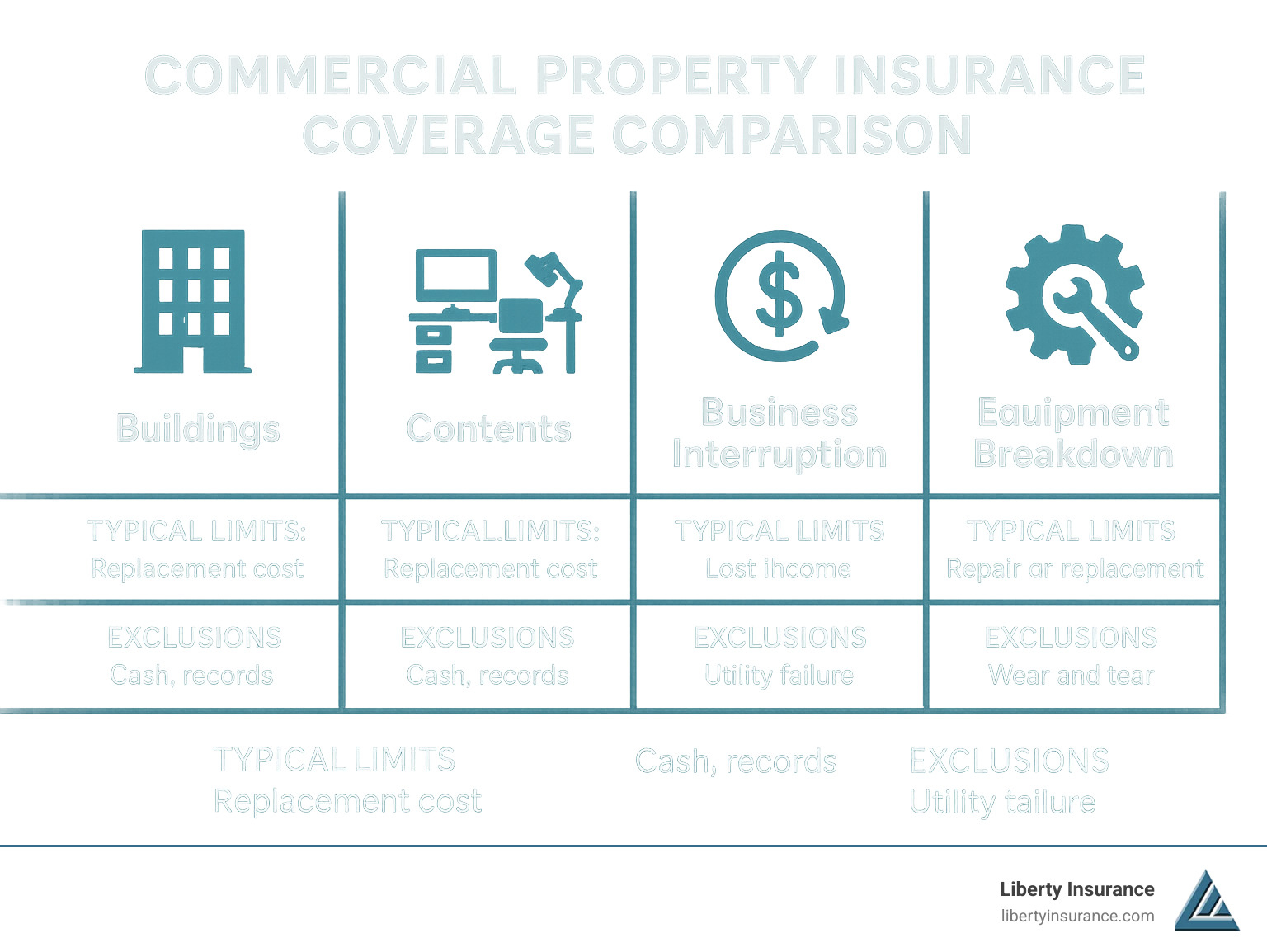
There are several types of small business insurance, each designed to protect different aspects of your company. General Liability Insurance handles claims of bodily injury or property damage. Meanwhile, Commercial Property Insurance covers your business’s physical assets against theft, fire, and other disasters.
Another critical coverage is Workers’ Compensation Insurance. This is necessary if you have employees, as it covers medical costs and lost wages if they get hurt on the job. And let’s not forget Professional Liability Insurance, which protects you from claims of negligence or mistakes in the services you provide.
Coverage Options for Small Businesses
Not every small business is the same, and neither are insurance policies. You need to tailor your coverage to fit your unique needs. Consider a Business Owner’s Policy (BOP), which combines the essential protections into one package. This usually includes general liability, property insurance, and business interruption insurance.
But here’s the deal: a BOP might not cover every risk. If you operate in a specialized industry, you might need additional coverage. For instance, if you’re in tech, you might need Cyber Liability Insurance to protect against data breaches.
Pro Tip: Always review your policy annually. Business landscapes change, and so do your risks.
Importance of Insurance for Business Sustainability
Without insurance, a single claim could bankrupt your business. Seriously. Imagine facing a lawsuit without the financial backing of insurance. You’d be out of pocket for legal fees and potential settlements.
Insurance not only protects you financially, but it also enhances your credibility. Clients and partners see insured businesses as more reliable and professional. In the long run, having the right insurance is crucial for building a sustainable business.
The Role of Commercial Insurance in Small Businesses
Did you know that 40% of small businesses never reopen after a disaster? That’s where commercial insurance steps in. It’s a crucial safety net that keeps your business afloat when the unexpected happens.
Commercial insurance is like a superhero for your business assets. It protects against risks like fire, theft, and even lawsuits. Without it, you’re playing a high-stakes game with everything you’ve built.
Protecting Your Business Assets
Here’s the deal: your business assets are your livelihood. Equipment, inventory, even your office space—it’s all on the line. Commercial insurance ensures these are covered, so when disaster strikes, you’re not left picking up the pieces alone.
For example, imagine a fire breaks out in your store. Without insurance, you’re facing a total loss. But with the right coverage, you’re back in business in no time.
Benefits of Commercial Insurance for Small Businesses
So, why do small businesses need commercial insurance? It’s simple: risk management. Insurance gives you peace of mind to focus on growth instead of potential disasters.
- Reduces financial losses
- Ensures business continuity
- Provides legal protection
Scenarios Where Commercial Insurance is Crucial
Let’s dive into some real-world scenarios. Imagine a customer slips and falls in your store. Without insurance, you’re staring down a costly lawsuit.
Or, consider a cyber attack that cripples your online operations. Commercial insurance can cover the fallout and get you back on track.
Pro Tip: Always review your policy to ensure it covers all potential risks specific to your business.
Comparing Commercial Insurance Options
With so many options, choosing the right policy can be overwhelming. Here’s a breakdown:
| Type | Coverage | Best For |
|---|---|---|
| General Liability | Third-party injuries and property damage | Retail and service businesses |
| Property Insurance | Physical assets protection | Brick-and-mortar businesses |
| Business Interruption | Lost income during disruptions | All businesses |
| Cyber Insurance | Data breaches and cyber attacks | Online businesses |
Factors Influencing Small Business Insurance Needs
Did you know that nearly 40% of small businesses fail to reopen after a disaster? It’s shocking, but it’s true. Understanding the factors that influence your business’s insurance needs can make all the difference.
When it comes to insuring your small business, there are several key factors at play. From the industry you operate in to the size and location of your business, each element shapes the type of insurance coverage you might need. Let’s dive deeper into these influential factors.
Industry Type
Your industry dictates a lot about your insurance needs. For example, a construction company faces entirely different risks than a retail shop. Are you in tech? You might need cyber liability insurance. In healthcare? Malpractice coverage is a must. Your business’s sector will heavily influence which policies are essential.
Business Size and Location
Here’s the deal: A small local bakery won’t have the same insurance needs as a growing tech startup. The size of your business affects the scale of coverage you require. More employees often mean higher liabilities. BUT, don’t forget about your location!
| Factor | Impact on Insurance Needs |
|---|---|
| Industry Type | Different risks based on industry-specific hazards |
| Size of Business | Influences liability coverage and policy limits |
| Location | Exposure to natural disasters or crime rates |
If your business is in a location prone to natural disasters, you’ll need particular coverage for that. It’s worth investing in geographic-specific policies to safeguard your assets.
Pro Tip: “Don’t underestimate the power of a well-tailored insurance policy. It can be a lifeline in unexpected situations.”
Common Risks to Consider
Every business faces risks, but knowing which ones are most pressing for you is crucial.
- Property Damage
- Liability Claims
- Employee Injury
- Cyber Attacks
- Natural Disasters
These are just a few of the risks that could impact your business. Analyze your specific situation to understand what insurance policies are vital to protect your assets and future.
Customizing Insurance Plans for Small Businesses

Did you know that 40% of small businesses have no insurance? That’s a risky move. Your business is unique, and you need an insurance plan that fits like a glove.
Off-the-shelf insurance plans often miss critical nuances related to your specific industry. But here’s the deal: by customizing your insurance, you can cover exactly what you need — nothing more, nothing less.
Tailoring Insurance to Specific Business Needs
Every small business has unique risks and requirements. To ensure you’re covered, start by identifying your specific liabilities. Are you a tech startup needing cyber liability insurance, or a restaurant requiring coverage for food spoilage? Tailoring your insurance means understanding these nuances.
Next, review your business operations and identify potential hazards. This helps pinpoint what coverage options are essential versus optional. Remember, the goal is to cover potential threats unique to your business landscape.
Step-by-Step Procedure for Evaluating and Selecting Insurance Plans
Let’s break down the process of choosing the right insurance plan into simple steps.
- Identify your business assets and liabilities. Make a list of valuable equipment, inventory, and potential legal liabilities.
- Research industry-specific risks. Talk to industry peers or consultants to understand common insurance pitfalls.
- Consult with an insurance expert. They can spot gaps in your coverage that you might miss.
- Compare policy details. Look beyond price at coverage limits and exclusions. It’s not about the cheapest policy but the best fit.
Pro Tip: Always customize your policy by adding endorsements that align with your specific business needs.
Customizing Coverage Using Case Studies
Let’s see this in action with a quick example.
A small bakery in Boston wanted to ensure they were protected against potential food spoilage and equipment breakdown. After assessing their specific needs, they added a special endorsement for food spoilage and increased their equipment breakdown coverage. This customization saved them from a major financial loss due to a refrigerator malfunction.
Compare this to a local IT firm that focused on cyber liability and data breach protection. They recognized the growing threat of cyber attacks and tailored their plan accordingly. The result? Peace of mind and a safeguarded business.
Evaluating Insurance Providers for Small Businesses

Did you know that 70% of small businesses feel overwhelmed when selecting an insurance provider? You’re not alone. Choosing the right insurance company can feel like finding a needle in a haystack.
But here’s the deal: knowing what to look for simplifies the process. By focusing on specific criteria, you can confidently choose a provider that suits your needs.
Criteria for Choosing Reliable Insurance Providers
When evaluating insurance providers, start with their financial stability. You want a company that can pay claims without hassle. Check ratings from agencies like AM Best or Standard & Poor’s. Next, consider their claims processing. Is it easy and streamlined or notoriously difficult?
Pro Tip: Always read customer reviews. They often reveal insights into the company’s customer service quality.
Methods for Researching and Comparing Insurance Companies
Now, let’s talk research. Start by creating a list of potential providers. Look at their website for information on their offerings. Many sites also have comparison tools that allow you to see differences in coverage and pricing side-by-side.
But don’t stop there. Contact each provider for detailed quotes. Sometimes, speaking with an agent can give you insights not available online.
Pros and Cons of Top Insurance Providers
Choosing the best provider sometimes requires a simple pros and cons analysis. Let’s break it down:
| Provider | Pros | Cons |
|---|---|---|
| Provider A | Strong financial stability, excellent customer service | Higher premiums |
| Provider B | Affordable rates, easy claims process | Limited coverage options |
| Provider C | Comprehensive coverage, great discounts | Poor online tools |
Common Misconceptions about Small Business Insurance
Think you know everything about small business insurance? Think again. There are plenty of myths out there that could be costing you money and peace of mind.
Many small business owners think they’re covered for everything, only to find out too late that their assumption was wrong. Understanding the facts can mean the difference between thriving and going out of business after a disaster.
Small Businesses Don’t Need Insurance
One common misconception is that small businesses don’t need insurance. People think, “I’m too small to be a target.” But the truth is, 43% of cyber attacks target small businesses because they often have weaker defenses.
Even a small mishap, like a slip and fall on your premises, can result in hefty legal fees. Don’t risk it. Investing in the right insurance now can save you from massive losses later.
Insurance Is Too Expensive for Small Businesses
Another myth is that insurance is too costly for small businesses. Many owners think they can’t afford it. But here’s the deal: The cost of a single lawsuit could far exceed a decade’s worth of premiums.
- Skipping insurance may save you some cash short term.
- But a fire, theft, or lawsuit could drain your bank account overnight.
Pro Tip: Shop around and compare policies to find affordable rates tailored to your needs.
Home-Based Businesses Don’t Need Insurance
Many home-based business owners assume their homeowners insurance will cover everything. However, most homeowners policies specifically exclude business-related claims.
Imagine your home office equipment gets stolen or a client gets injured while visiting. If you don’t have the right coverage, you’re on the hook. Always check your policy to ensure you’re not making this mistake.
General Liability Covers All Risks
Some believe that having general liability insurance means they’re fully protected. This is a dangerous misconception. General liability doesn’t cover everything, such as professional errors or employee injuries.
Relying solely on this type of insurance could leave you exposed in several areas. Consider additional policies like errors and omissions or workers’ compensation to cover those gaps.
Conclusion
There you have it—the blueprint to safeguard your small business through strategic insurance choices. By understanding and leveraging these three crucial commercial insurance options, you’re not just protecting your business; you’re investing in its future prosperity. Remember, the right insurance plan isn’t just an expense; it’s an essential part of your business strategy that can make all the difference when challenges arise. So, go ahead, take the reins, and ensure your business is ready for whatever the ride brings!
Frequently Asked Questions
What are the three main types of small business commercial insurance?
The three main types include General Liability Insurance, Property Insurance, and Workers’ Compensation Insurance.
Why is commercial insurance crucial for small businesses?
It protects business assets, provides financial security, and ensures operational continuity in the face of unexpected events.
How can I customize an insurance plan for my small business?
Identify your business risks, evaluate different coverage options, and consult with an insurance expert to tailor a plan that fits your specific needs.
What factors influence the insurance needs of a small business?
Key factors include the industry type, business size, location, and specific risks associated with the business operations.
What are some common misconceptions about small business insurance?
Misconceptions include the belief that small businesses don’t need insurance, or that all insurance policies are overly expensive and unnecessary.
